
If your salary disappears before the month ends… you’re not alone.
Most families struggle with saving money—not because they don’t earn enough, but because they don’t have a clear system. Bills, groceries, kids’ expenses, and unexpected costs quickly eat up income, leaving little to no savings behind.
But what if you could finally take control of your finances using one of the most effective money saving methods that actually works in real life?
That’s where the envelope method for saving money comes in—a simple yet powerful system that helps families stop overspending, stick to a budget, and build consistent savings without stress.
Envelope Method for Saving Money: A Practical Guide for Families to Master Budgeting & Build Savings
Introduction
In today’s rising inflation, managing household expenses has become harder than ever. Many families earn enough, but still struggle with saving money because there is no clear system to control spending. This is where the envelope method for saving money becomes a game-changer.
The envelope method is one of the most practical and proven money saving methods that helps families take full control of their finances. Instead of guessing where money goes, this system forces you to plan every expense in advance. By using simple saving money tips like dividing cash into categories, families can avoid overspending, reduce debt, and build consistent savings over time.
Whether you’re living paycheck to paycheck or just want to improve your financial habits, this method offers a simple yet powerful solution to regain control and create a stable financial future.
Envelope Method for Saving Money: A Practical Guide for Families to Master Budgeting & Build Savings
Introduction
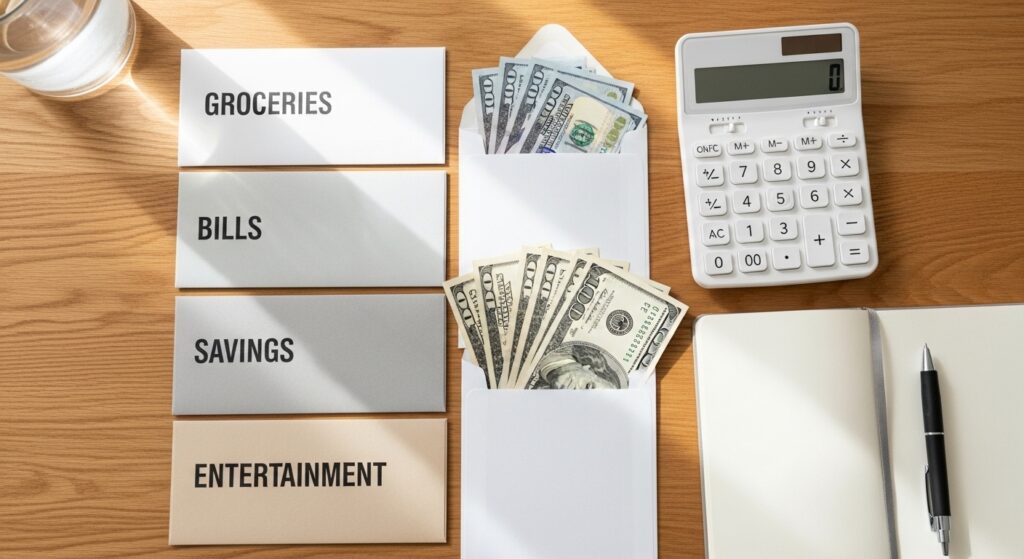
In today’s rising inflation and increasing household expenses, many families find it harder than ever to stay on budget and build savings. No matter how much you earn, money often seems to disappear quickly—leaving you stressed, overwhelmed, and stuck in a cycle of overspending.
This is where the envelope method for saving money becomes a game-changer.
The envelope method is one of the most practical and effective money saving methods that helps families take full control of their finances. Instead of relying on guesswork or complicated apps, this system uses a simple cash-based approach where you divide your money into categories like groceries, bills, and savings—ensuring every rupee has a purpose.
What makes this method so powerful is its simplicity. It forces you to stay within your limits, avoid unnecessary spending, and become more aware of where your money is going. For families struggling to manage expenses, this approach provides clear structure and discipline—two essential elements for long-term financial success.
By following this system along with proven saving money tips, families can reduce debt, avoid financial stress, and steadily build a strong savings habit—even in tough economic times.
Whether you’re living paycheck to paycheck or just looking for better ways to manage your finances, the envelope method offers a realistic and actionable path toward financial stability.
What is the Envelope Method for Saving Money? (Simple Explanation for Beginners)
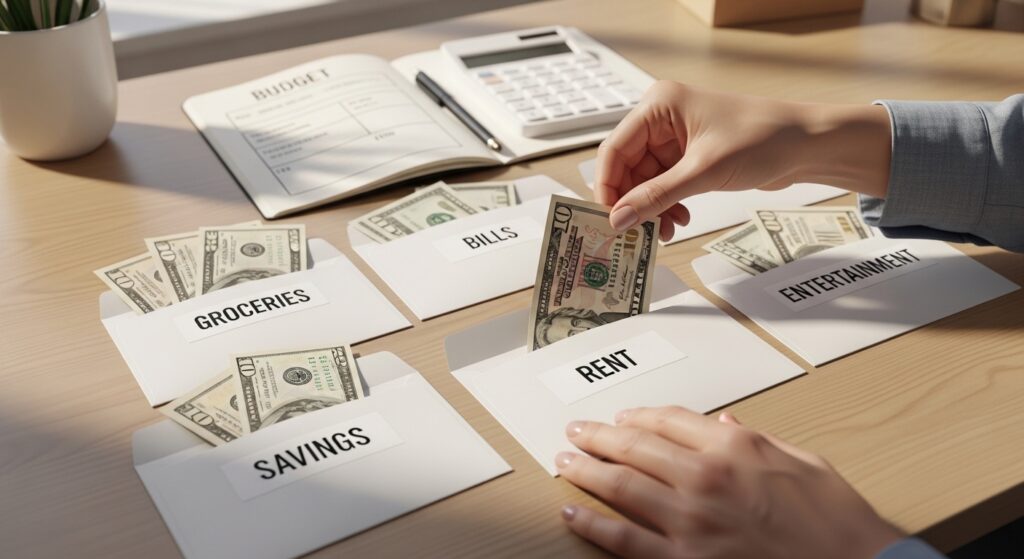
The envelope method for saving money is one of the simplest yet most powerful money saving methods designed to help people take full control of their monthly budget without complicated tools or apps.
In this system, you divide your total income into different spending categories and assign each category its own physical or digital “envelope.” Each envelope represents a specific purpose such as groceries, rent, utilities, transportation, savings, or entertainment.
For example, if you set aside $300 for groceries, you place that amount into a “Groceries” envelope. Once that money is finished, you stop spending in that category until the next budget cycle begins. This simple rule is what makes the system so effective.
The real power of this method lies in how it builds discipline and financial awareness. Instead of spending freely and guessing where your money went, you become fully aware of every rupee or dollar you use. This is especially important for families managing tight budgets, where even small overspending can create financial pressure.
By physically or mentally separating your money into categories, you naturally develop better saving money habits, reduce unnecessary spending, and start making more intentional financial decisions. Over time, this leads to stronger control over your finances and steady savings growth.
In short, the envelope method is not just a budgeting trick—it’s a practical saving money strategy that teaches you to respect your money and prioritize what truly matters.
Why the Envelope Method is One of the Best Money Saving Methods for Families
The envelope method for saving money stands out as one of the most effective money saving methods for families because it creates structure, discipline, and clarity in everyday spending. Unlike traditional budgeting approaches that are often ignored or forgotten, this method is simple enough to follow consistently—even in busy households.
One of the biggest advantages is that it limits overspending instantly. When families allocate cash into specific envelopes for categories like groceries, utilities, and transport, they can only spend what is available in each envelope. This naturally prevents impulsive purchases and helps families stay within their monthly budget without constant calculations or stress.
Another key benefit is financial transparency. Every family member can clearly see how much money is available for each category. This reduces confusion, arguments about spending, and hidden expenses. It creates a shared understanding of the household budget, which is especially important when multiple people are involved in managing expenses.
Most importantly, the envelope method significantly reduces financial stress. Instead of worrying about unexpected overdrafts or credit card debt, families gain peace of mind knowing exactly where their money is going. This simple system helps replace uncertainty with control and confidence.
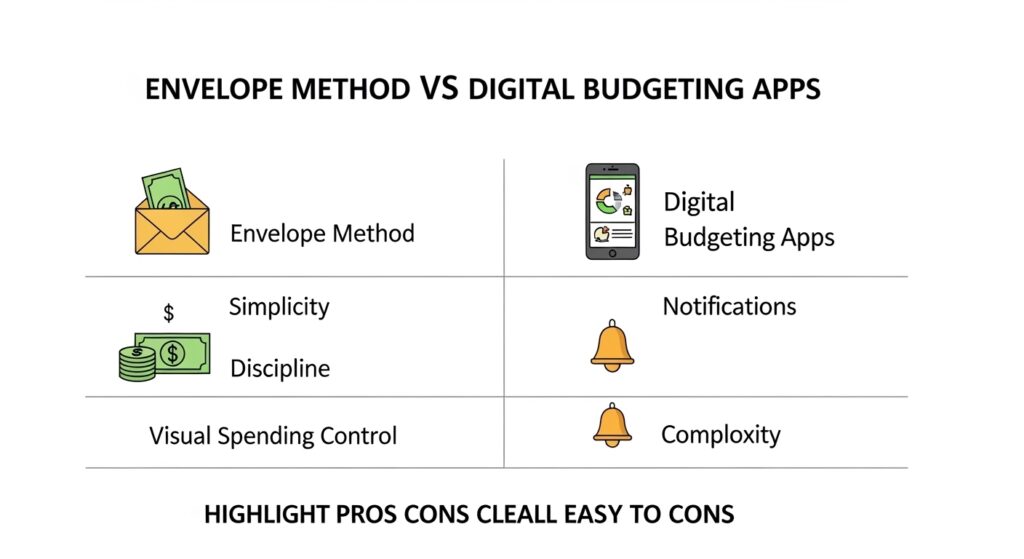
When compared to digital budgeting apps, the envelope method often proves more practical for many families. While apps require consistent tracking, internet access, and discipline to update regularly, the envelope method is immediate and tangible. You physically see your money decreasing, which creates stronger awareness and better spending habits.
Digital apps may offer convenience, but the envelope method wins in terms of simplicity, discipline-building, and real-world effectiveness—making it one of the most reliable saving money tips for families dealing with tight or fluctuating budgets.
The Role of Budgeting: The Foundation of Every Savings Strategy
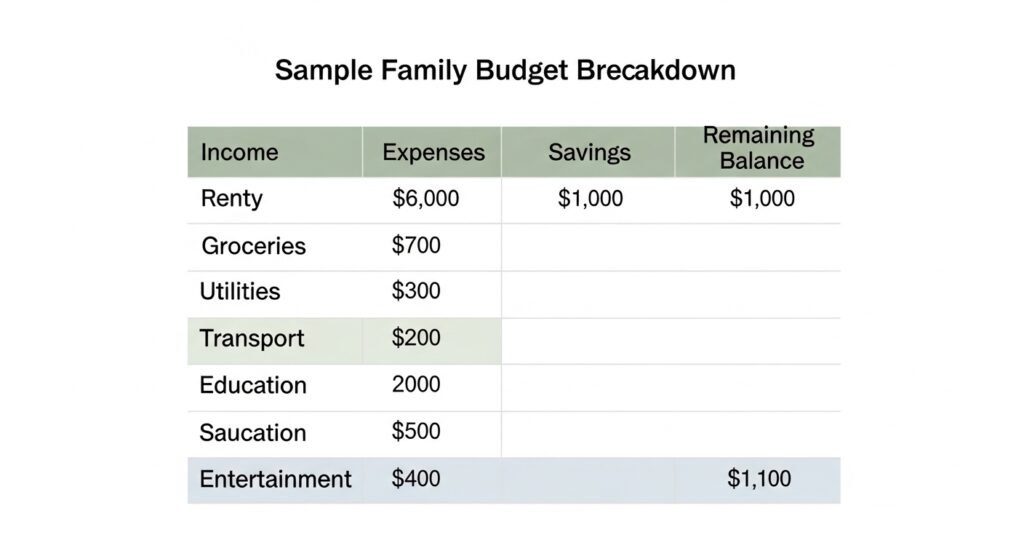
Budgeting is the backbone of every successful savings strategy, and without it, even the best systems like the envelope method for saving money will fail to deliver consistent results. A budget gives your money direction—it tells you exactly where your income should go instead of wondering where it disappeared.
For families, budgeting is even more important because multiple expenses—such as rent, groceries, school fees, utilities, and transportation—must be managed together. Without a clear plan, spending becomes random, and savings become almost impossible. A proper budget turns chaos into control by assigning every rupee a specific purpose.
Simply put, if the envelope method is the “system,” then budgeting is the “map” that makes the system work effectively.
How Budgeting Helps in Saving Money
Budgeting plays a critical role in saving money because it forces you to track both income and expenses with clarity. When you know exactly how much money is coming in and going out, you gain full awareness of your financial situation.
This awareness ensures that every rupee has a purpose, whether it is for essentials, savings, or discretionary spending. Instead of spending blindly, families begin to prioritize needs over wants, which naturally reduces unnecessary expenses.
Budgeting also helps identify wasteful spending habits—such as frequent takeout, unused subscriptions, or impulse shopping. Once these leaks are identified, families can redirect that money toward savings or important financial goals.
In short, budgeting is not about restriction—it is about control, clarity, and smarter financial decisions.
Creating a Family Budget Step-by-Step
Building a family budget doesn’t have to be complicated. By following a simple process, you can create a realistic plan that supports both daily needs and long-term savings goals.
Step 1: Calculate Total Monthly Income
Start by listing all sources of income, including salary, side income, or any additional earnings. This gives you a clear starting point for your budget.
Step 2: List All Monthly Expenses
Write down every expense your family has, including fixed costs (rent, utilities, school fees) and variable costs (groceries, transport, entertainment).
Step 3: Categorize Your Spending
Group your expenses into categories such as essentials, savings, debt repayment, and lifestyle spending. This helps you understand where your money is going.
Step 4: Allocate Amounts to Each Category
Assign a fixed amount to each category based on priority. Make sure essentials come first, followed by savings and then optional spending.
Step 5: Adjust and Review Monthly
At the end of each month, review your budget and adjust based on actual spending patterns. This ensures continuous improvement.
When done correctly, this process becomes the foundation that supports the envelope method for saving money, making it far more effective and sustainable for families.
Step-by-Step Guide to Using the Envelope Method for Saving Money
The envelope method for saving money becomes truly powerful when applied step by step in real life. This system is not just about dividing cash—it’s about creating a disciplined spending habit that helps families control expenses, avoid debt, and consistently grow savings. Below is a practical guide that any family can start using immediately.
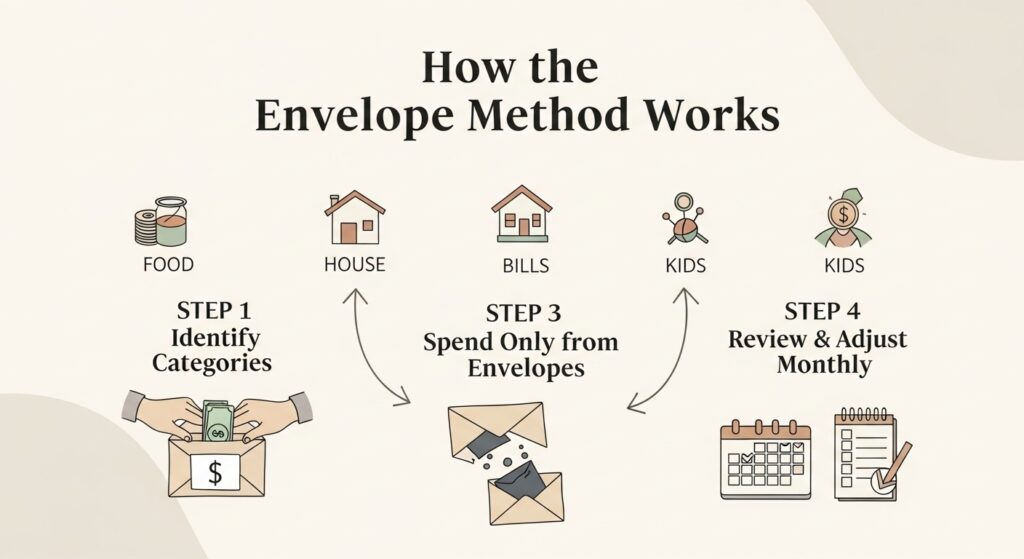
Step 1 – Identify Spending Categories
The first step is to clearly define where your money goes each month. Most families usually spend on a few key areas such as groceries, rent, utilities, transportation, kids’ expenses, savings, and entertainment.
By identifying these categories, you bring structure to your finances. Instead of spending randomly, every expense is planned in advance, which is the foundation of effective money saving methods.
Step 2 – Allocate Cash to Each Envelope
Once categories are set, the next step is to assign a fixed amount of money to each envelope based on your monthly budget.
For example:
- Groceries → fixed monthly amount
- Rent → fixed payment
- Utilities → estimated usage cost
- Savings → pre-decided percentage of income
The key here is realism. Each allocation should match your actual income and priorities. This step transforms your budgeting plan into a physical system, making it easier to control spending.
Step 3 – Spend Only What’s in the Envelope
This is the most important rule of the system.
Once the money in an envelope is finished, you stop spending in that category immediately—no borrowing from other envelopes, no credit card shortcuts.
This discipline builds strong financial awareness and prevents overspending, which is one of the biggest problems families face. Over time, this habit becomes one of the most effective saving money tips for long-term financial stability.
Step 4 – Adjust and Improve Monthly
At the end of each month, review your envelopes. Check where you spent too much and where you saved more than expected.
Adjust your categories based on real spending patterns. For example, if groceries were underestimated, increase that envelope next month and reduce non-essential categories.
This continuous improvement turns the envelope method into a flexible and powerful savings strategy that grows with your family’s needs.
Smart Money Saving Techniques to Maximize the Envelope Method
The envelope method for saving money becomes even more powerful when combined with practical money saving techniques. While the system itself controls spending, these smart habits help families stretch their budget further, reduce waste, and increase overall savings.
Cut Unnecessary Expenses
One of the fastest ways to improve your financial situation is to eliminate money leaks that go unnoticed every month. Common examples include unused subscriptions, frequent online shopping, unnecessary food delivery, and impulse purchases.
By reviewing your spending regularly, you can identify where money is being wasted and redirect it toward essential needs or savings. This simple habit strengthens your overall savings strategy and ensures your envelopes are used more efficiently.
Prioritize Needs Over Wants
A major part of successful saving money tips is learning the difference between needs and wants. Needs are essential expenses like food, rent, utilities, and education, while wants include entertainment, luxury items, and non-essential purchases.
Families who consistently prioritize needs over wants naturally stay within budget and avoid financial stress. This mindset shift is key to long-term financial stability and is one of the most important saving money habits you can develop.
Use Leftover Cash as Savings
At the end of each budgeting cycle, there is often some leftover money in certain envelopes. Instead of spending this extra cash, transfer it directly into savings.
This “leftover savings” approach helps build financial momentum over time. Even small amounts add up, turning unused budget money into a growing emergency fund or future investment capital. This is one of the simplest yet most effective money saving methods for families.
Saving Money Tips for Families in High Inflation Times
In today’s high inflation environment, managing a household budget has become more challenging. Prices for groceries, fuel, and utilities continue to rise, making it essential for families to adopt smarter saving money tips and adjust their financial strategies regularly.
Adjust Budgets for Inflation
Inflation directly impacts every category of spending, so families must regularly review and update their budgets. If prices increase, adjust your envelope allocations accordingly instead of ignoring the change.
This ensures your budgeting system stays realistic and prevents financial shortfalls at the end of the month.
Bulk Buying & Smart Shopping
One of the most effective ways to reduce daily expenses is bulk buying essential items like rice, flour, oil, and cleaning products. Purchasing in larger quantities often reduces per-unit cost and saves money in the long run.
Additionally, smart shopping techniques—such as comparing prices, using discounts, and avoiding impulse purchases—help families stretch their budget further while maintaining quality living standards.
Reduce Utility Bills
Utility bills are a major part of monthly expenses, but small changes can lead to significant savings. Simple habits like turning off unused lights, reducing water wastage, using energy-efficient appliances, and unplugging electronics can lower electricity and water bills.
These small adjustments may seem minor, but over time they significantly improve a family’s financial health and support long-term savings goals.
Turn Saving into a Game: Try a Bi Weekly Savings Challenge
Saving money often feels difficult for families because it is treated like a restriction instead of a habit. But when you turn it into a money challenge, it becomes more engaging, motivating, and easier to follow. The bi weekly savings challenge is a simple way to combine fun with discipline while strengthening your envelope method for saving money system.
This approach encourages families to save a fixed or gradually increasing amount every two weeks, helping them build consistency, discipline, and long-term financial stability without feeling overwhelmed.
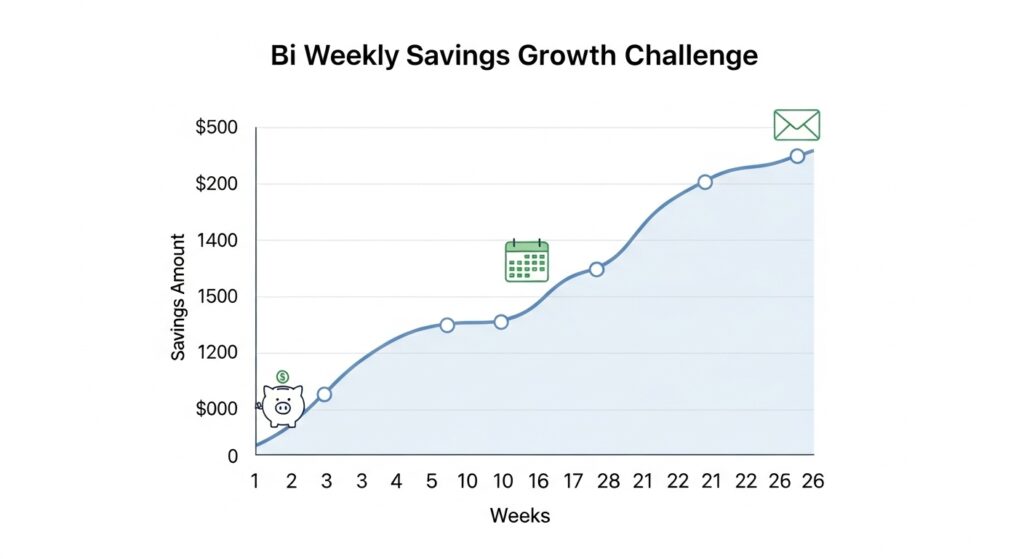
What is a Bi Weekly Savings Challenge?
A bi weekly savings challenge is a structured savings plan where you set a specific amount of money to save every two weeks instead of monthly or irregular saving.
It works perfectly with the envelope method because you can assign a separate “Savings Challenge” envelope and treat it like a priority category. Every two weeks, you deposit the required amount into this envelope before spending on anything else.
This method transforms saving from a stressful task into a simple routine. Over time, it builds strong financial habits and improves your overall savings strategy, especially for families trying to manage tight budgets.
Example Plan for Families
Here is a simple 12–26 week bi weekly savings plan that families can follow:
- Weeks 1–2: Save a small starting amount (e.g., $10–$20)
- Weeks 3–4: Increase slightly (e.g., $25–$30)
- Weeks 5–8: Maintain steady growth (e.g., $40 per cycle)
- Weeks 9–16: Gradually increase savings (e.g., $50–$75)
- Weeks 17–26: Push toward higher savings targets (based on income capacity)
The idea is not perfection but progressive growth. Even small increases over time can lead to significant savings by the end of the challenge.
This structure makes saving money feel like a game where each cycle is a win, helping families stay motivated and consistent.
Tips to Stay Consistent
Consistency is the most important factor in any saving money challenge. Here are simple ways families can stay on track:
- Start with realistic amounts so the challenge feels achievable
- Automate or schedule your savings every two weeks
- Track progress visually (charts or calendars work best)
- Celebrate small milestones to stay motivated
- Avoid skipping cycles—even small contributions matter
By following these habits, families can turn saving into a routine rather than a struggle. Over time, this consistency builds strong financial discipline and supports long-term wealth building.
Common Mistakes to Avoid When Using the Envelope Method
The envelope method for saving money is simple and highly effective, but many families fail to get the full benefits because of small but critical mistakes. Avoiding these pitfalls is just as important as following the system itself, especially if your goal is to build long-term financial stability through better money saving methods.
Not Following the Budget Strictly
One of the biggest mistakes families make is breaking the rules of their own budget. The envelope method only works when you stick to the limits assigned to each category.
If you start borrowing money from one envelope to cover another or spend beyond the allocated amount, the system loses its purpose. This leads to overspending, confusion, and eventually financial imbalance.
Discipline is the foundation of this method—without it, even the best saving money tips will not deliver results.
Setting Unrealistic Limits
Another common mistake is creating a budget that is too strict or unrealistic. Many families try to save aggressively by underestimating their essential expenses, which leads to frustration and failure.
For example, setting too little money for groceries or utilities may force you to break the system midway through the month. A successful savings strategy must be practical, flexible, and based on real spending habits.
The goal is consistency, not perfection. A realistic budget is far more powerful than an extreme one.
Ignoring Emergency Funds
Many families forget to include an emergency fund when using the envelope method. This is a critical mistake because unexpected expenses—like medical bills, repairs, or urgent travel—can disrupt the entire budget.
Without a dedicated emergency envelope, families often end up borrowing money or using savings meant for other goals. Building even a small backup fund ensures financial stability and prevents stress during unexpected situations.
An emergency fund is not optional—it is a core part of a strong saving money strategy.
Combining Saving with Earning: Smart Money Makers for Families
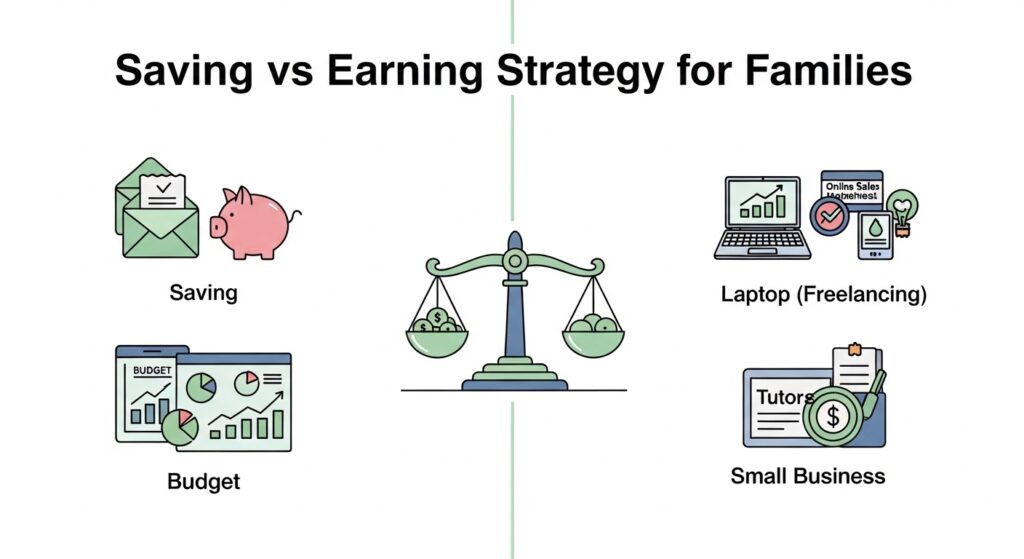
While saving money is essential, increasing income at the same time creates even faster financial progress. Families that combine saving with earning opportunities can build wealth more effectively and reduce financial pressure.
This approach turns the envelope method for saving money into a complete financial growth system.
Small Money Makers You Can Start Today
There are many simple ways families can generate extra income without heavy investment. These small money makers can be started from home and adjusted to your schedule.
Examples include:
- Freelancing (writing, design, data entry)
- Selling unused household items online
- Small home-based businesses (snacks, crafts, reselling)
- Teaching or tutoring skills
- Online gigs or microtasks
Even a small side income can significantly improve your monthly budget and increase your savings potential. When combined with strong money saving techniques, it accelerates financial growth.
Teaching Kids About Money
Involving children in financial habits is one of the most powerful long-term strategies for families. Teaching kids how money works helps them understand value, discipline, and responsibility early in life.
Simple practices like giving them small savings envelopes, involving them in budgeting decisions, or encouraging them to save part of their pocket money can make a big difference.
This not only strengthens your family’s financial discipline but also builds a generation that is smarter with money. Over time, it reinforces your overall saving money tips for families strategy.
Conclusion: Build Savings First, Then Explore Income Growth Opportunities
The envelope method for saving money is more than just a budgeting trick—it is a practical financial system that helps families regain control over their income, eliminate overspending, and build consistent savings habits. By dividing money into clear categories and sticking to limits, families can finally understand where their money goes and make smarter financial decisions.
When combined with simple money saving methods and consistent saving money tips, this approach becomes a powerful foundation for long-term financial stability. It reduces stress, improves discipline, and helps families gradually move away from debt cycles toward financial confidence.
The most important takeaway is consistency. Small improvements in budgeting and spending habits, when followed regularly, can lead to significant savings over time. This is where real financial transformation begins—not in earning more, but in managing better.
What’s Next? Grow Beyond Saving
Once you have successfully built a strong saving habit using the envelope method, the next step is to focus on growth. Saving money is only the first phase of financial improvement—true wealth building starts when you combine saving with income expansion.
Families can begin exploring:
- Income ideas such as freelancing, small home businesses, or skill-based services
- Side hustle ideas that generate extra monthly cash flow without affecting primary jobs
- Passive income opportunities that continue to earn money with minimal ongoing effort
By using your savings as a financial foundation, you create opportunities to invest, start new income streams, and build long-term financial security.
In the end, the goal is not just to save money—but to grow it. The envelope method gives you control, and your next step is to turn that control into financial freedom.